Sim Kyunghee’s LA LA LAND (심경희의 라라랜드) Review: Retro LA Galbi in Seoul
Some restaurants in Seoul feel like they were built for Instagram — perfectly styled, perfectly plated, and honestly… a little too polished. But every now and then, you walk into a place that feels like it has its own history, its own personality, and zero interest in trends.
That’s exactly the vibe at Sim Kyunghee’s LA LA LAND (심경희의 라라랜드).
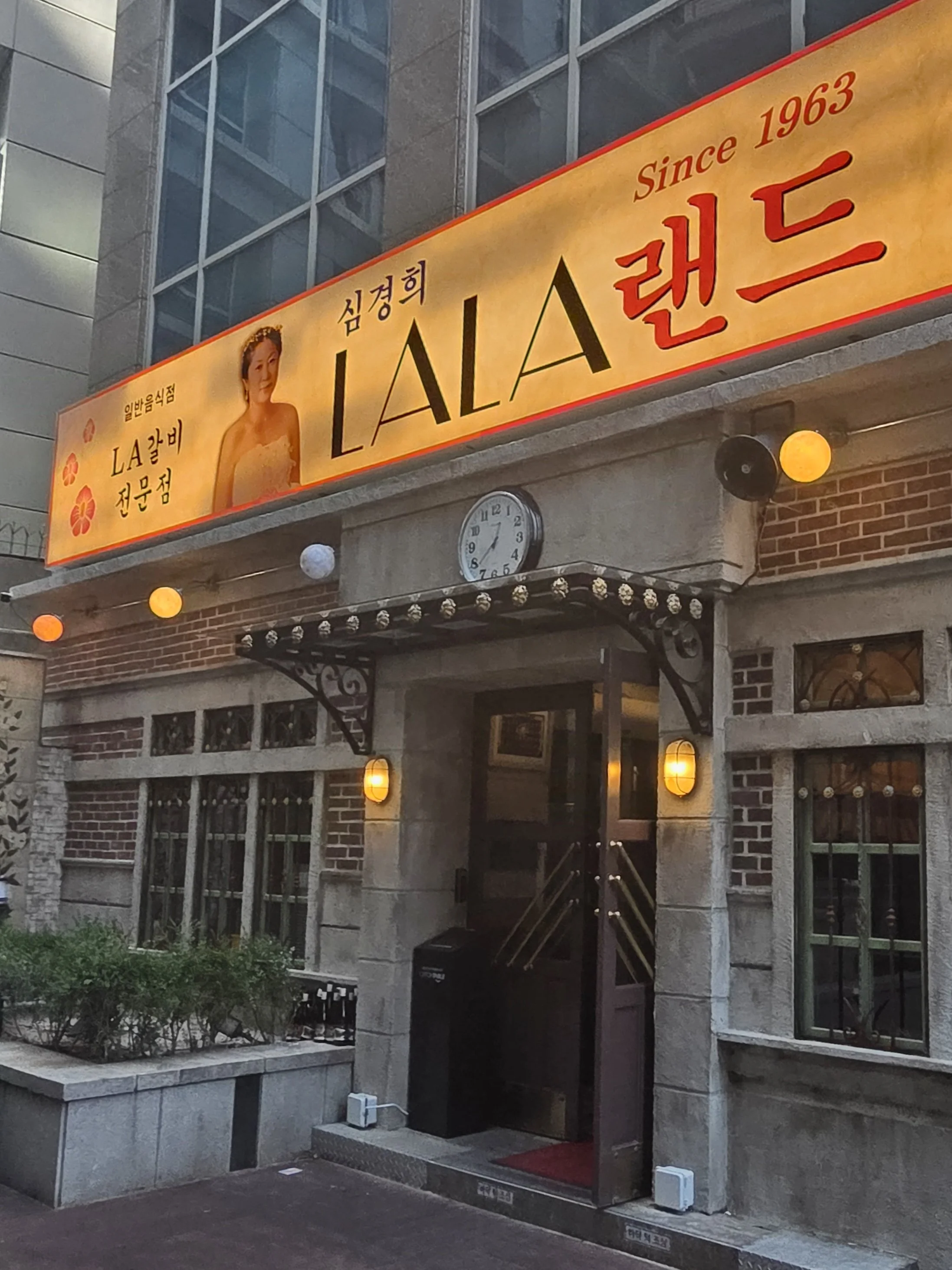
From the moment you see the huge sign outside that says “Since 1963”, you already know you’re not walking into a new “hot spot.” You’re walking into a restaurant that’s been around long enough to become a memory for a lot of people. And once I stepped inside, it genuinely felt like I entered a different era of Seoul — the kind that doesn’t really exist anymore unless you actively go looking for it.
This is my experience at Sim Kyunghee’s LA LA LAND, what I ate, what stood out, and why I think it’s one of the most interesting old-school Korean restaurants I’ve visited.
Today’s Stop : Sim Kyunghee’s La La Land (심경희의 라라랜드)
Address : 102, Kukhui-daero 66-gil, Yeongdeungpo-gu, Seoul / 113~116, Sambong-ro 95, Jongno-gu, Seoul
Instagram : @lalaland.official_
First Impressions: The Sign, the Street, and the “Since 1963” Energy
The exterior already makes an impression.
The big bright sign with “LA LA LAND” written across it feels almost dramatic, like a vintage movie theater entrance. It’s slightly over-the-top in a way that’s charming instead of tacky, and it gives the place this iconic, almost “landmark” feeling.
Even just standing outside for a second before going in, it had that atmosphere where you feel like locals have been coming here forever — the kind of restaurant you’d hear about from someone’s parents or uncle, not from trending TikToks.
And personally, I love that.
The Interior:
Old-School Seoul in the Best Way
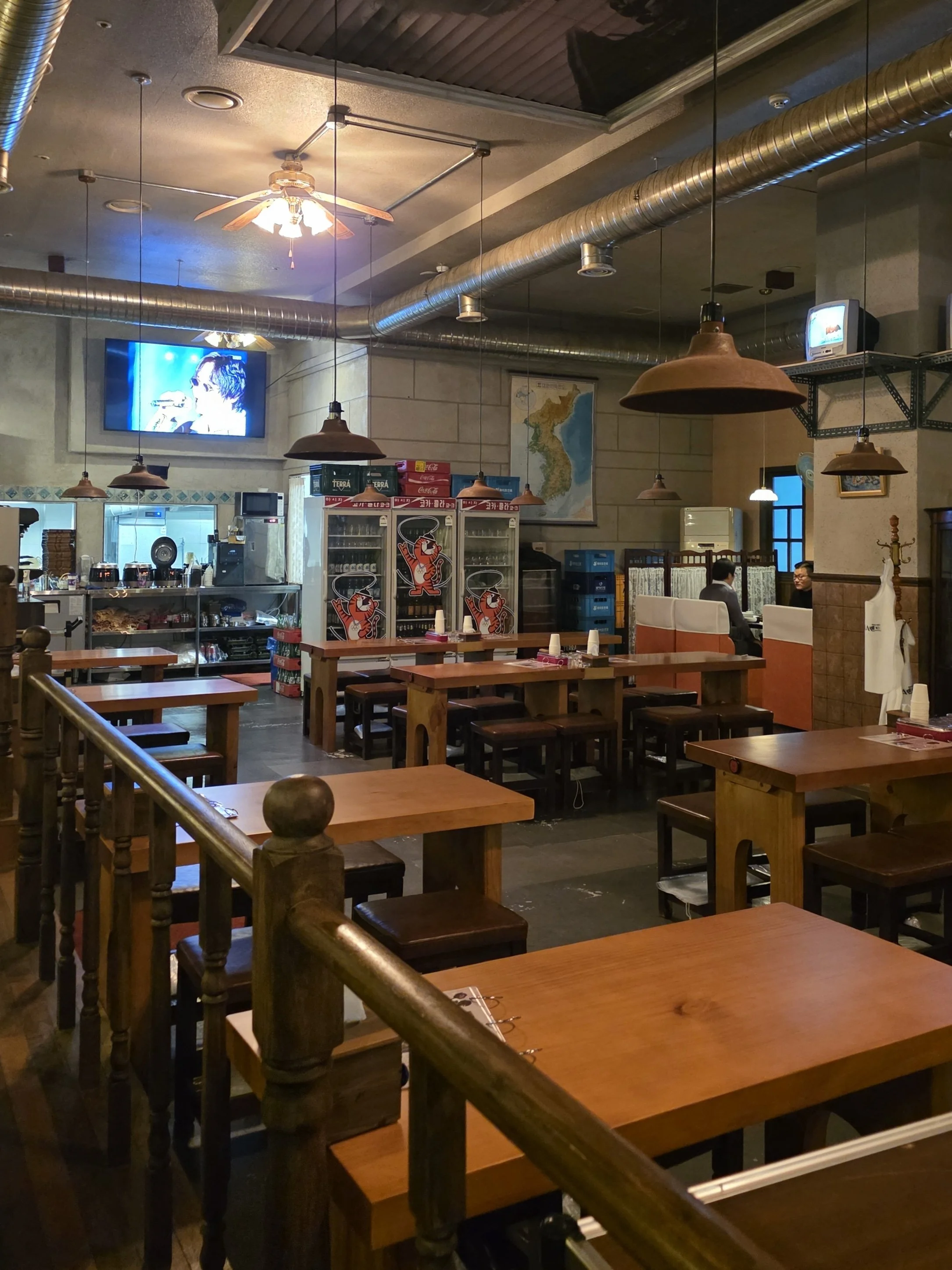
Once you walk inside, the vibe is fully committed.
It’s not minimalist, it’s not sleek, and it’s definitely not trying to be modern. Instead, it feels like a classic Korean restaurant that time forgot — warm lighting, solid wooden tables, and a very “retro Korean family dinner” atmosphere.
One detail I noticed immediately was the open, spacious seating layout. It’s not cramped, and there’s something comforting about how straightforward it feels. No complicated design gimmicks, no curated corners — just a proper dining space built for people to sit down and eat.
Even the background details (like the TV playing) add to that nostalgic energy. It’s the kind of place where you can imagine coworkers coming after work, or families celebrating something simple like a birthday without making it a big production.
If you’re someone who loves Seoul for its hidden, older spots — the places that feel real — this interior will hit.
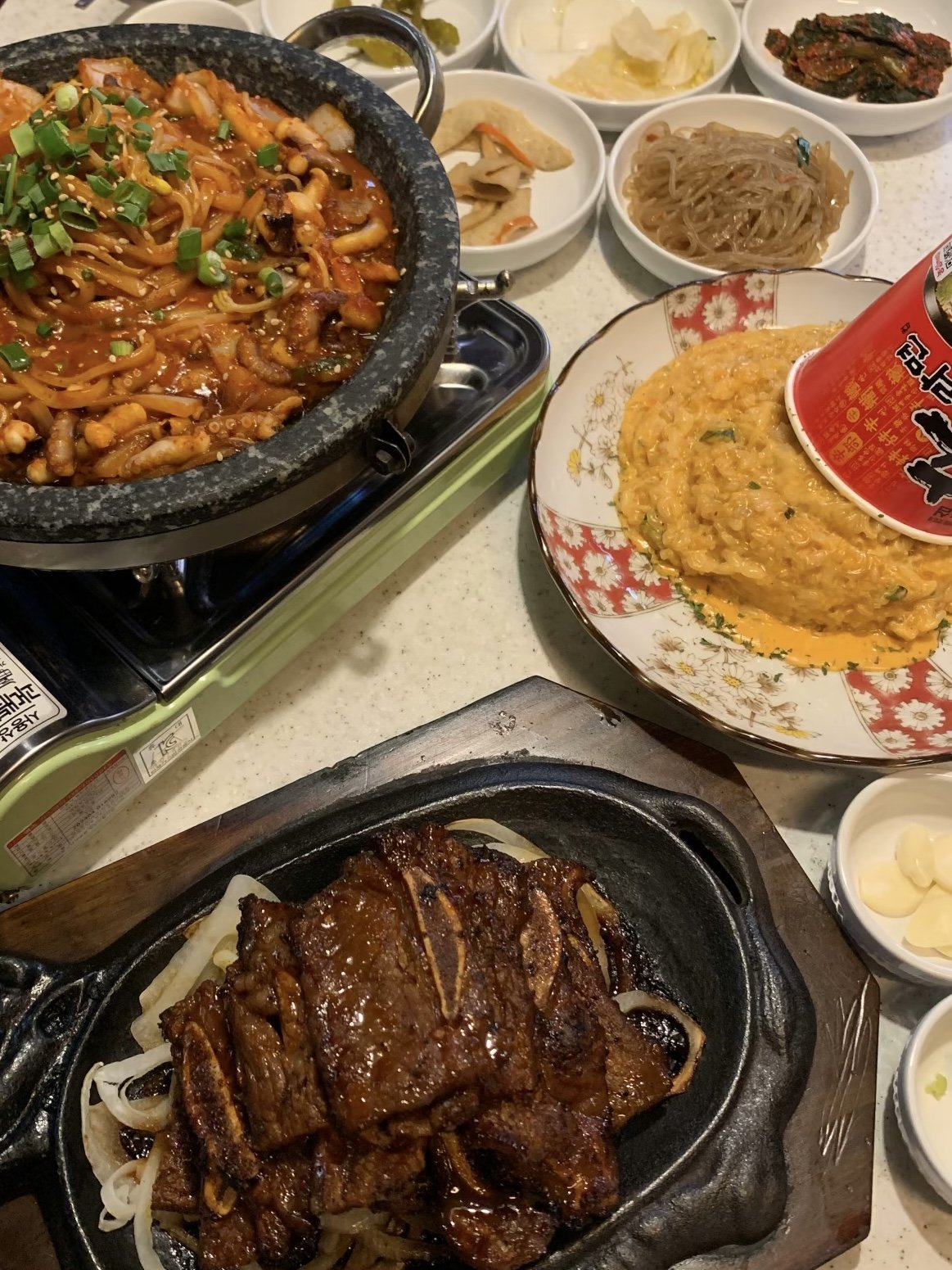
What I Ordered
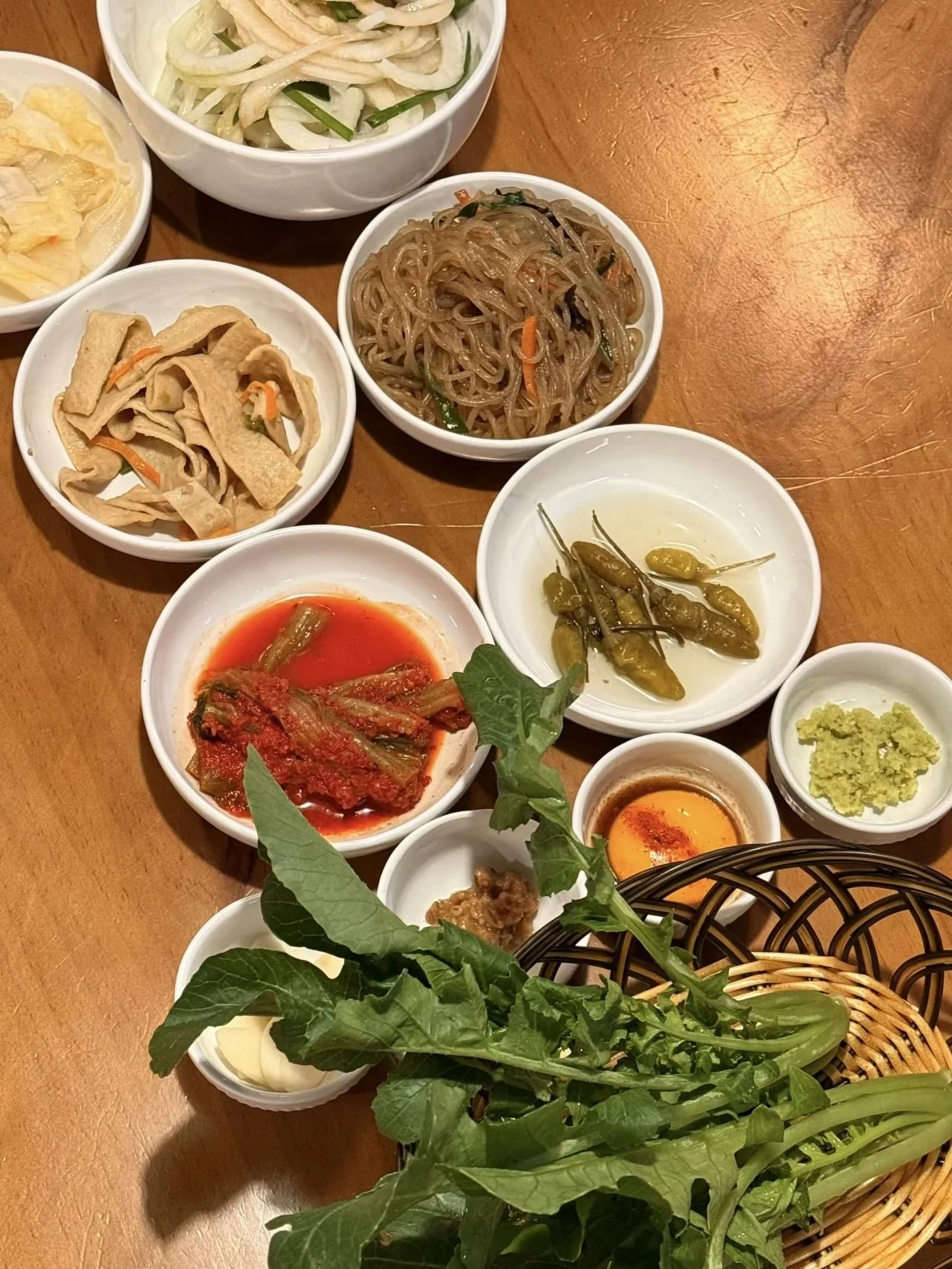
The meal came out with a table that honestly looked like a full Korean feast.
There were multiple banchan (side dishes) lined up, and you can tell it’s the kind of restaurant that still believes in feeding you properly. Not just one tiny dish of kimchi and calling it a day.
From what I had, the spread included:
Kimchi
Japchae (glass noodles)
Pickled garlic
Pickled chili peppers
Sliced onions
Fresh greens / ssam vegetables
Sauces and condiments, including something that looked like wasabi and other seasonings
It felt like a classic Korean table setup where every bite can be adjusted depending on what you want — salty, fresh, spicy, or rich.
And that’s exactly how Korean food should be, in my opinion. You’re not meant to eat one flavor the whole time. You’re meant to build bites.
The Star of the Meal: LA Galbi That Looks Like a Main Character
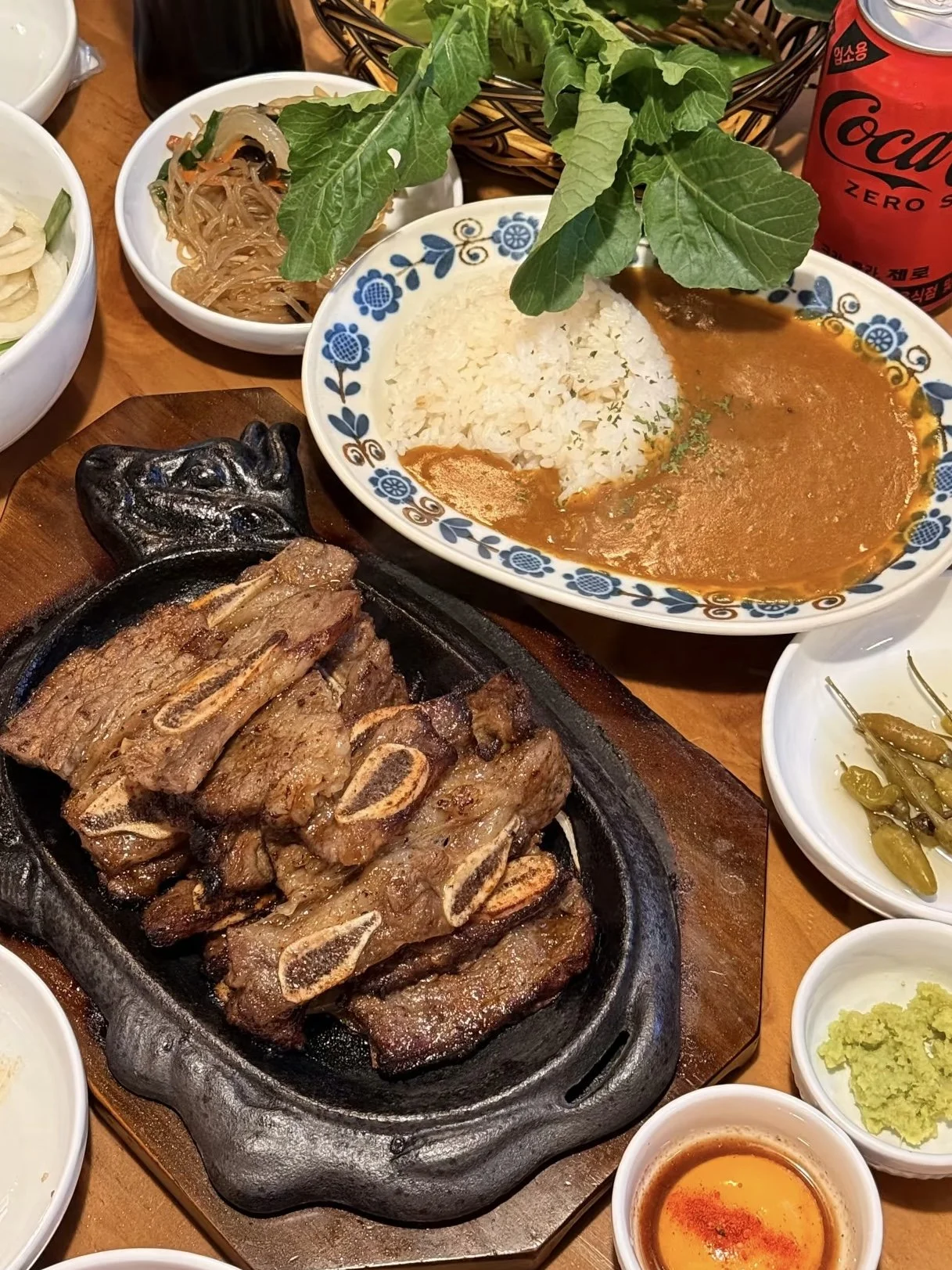
Let’s talk about the dish that made the biggest impression: LA galbi.
If you’ve ever had LA galbi, you know it’s usually sweet, savory, and deeply satisfying — but the version here felt extra comforting, like the kind of galbi you want when you’re hungry and you want something that tastes familiar.
The meat came out looking glossy and rich, with that deep color that tells you it’s been marinated properly. It wasn’t the type of galbi that looks trendy or overly styled — it looked like real Korean comfort food.
And when you pair it with a full table of banchan and greens, the experience becomes so much more than “just meat.”
It’s the kind of meal where:
you wrap the meat in greens,
add onions for crunch,
maybe a little garlic,
and suddenly every bite tastes different.
That’s the fun part of Korean dining — it’s interactive, and it’s never boring.
The Unexpected Favorite: Creamy “Korean-Style” Risotto With Ramyun
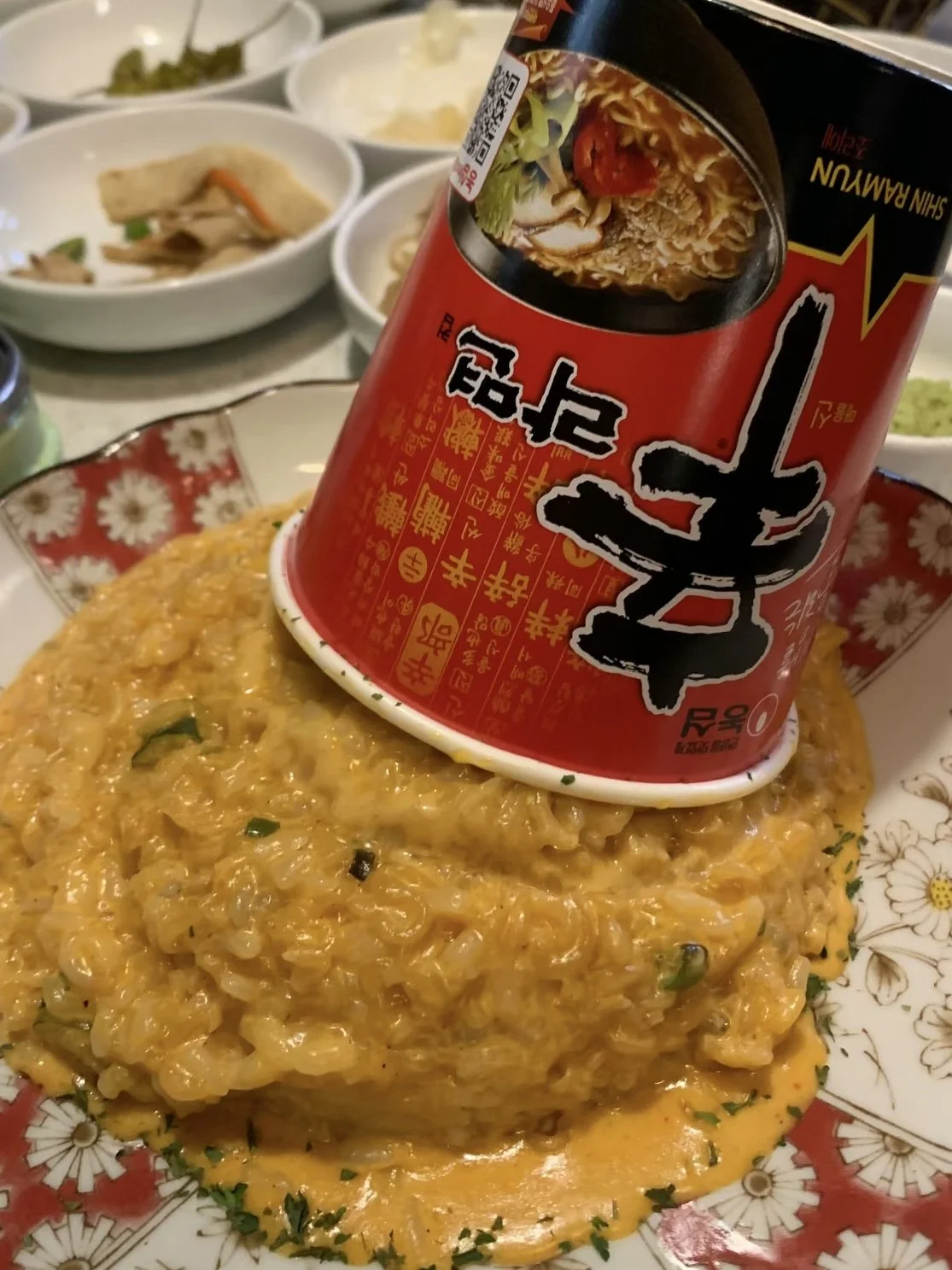
One of the most interesting dishes I had was something I didn’t expect at this kind of old-school restaurant: a creamy, eggy risotto-style dish, topped with an upside-down ramyun cup.
It sounds ridiculous when you describe it, but visually it’s so eye-catching. It’s the kind of dish that makes people at the table go, “Wait, what is THAT?”
The texture looked super rich and thick — almost like a creamy porridge-meets-risotto. If you like comfort food that feels heavy, warm, and satisfying, this is 100% that category.
It was also the kind of dish that balances out the meat perfectly, because it adds softness and creaminess to a meal that’s otherwise smoky and savory.
Not every Korean restaurant can pull off playful dishes without feeling forced, but here it felt fun — like they’re confident enough to do something random because they’ve already earned their place.
What “LA LA LAND” Means Here (And Why It’s a Funny Name)
If you’re wondering what the name “LA LA LAND” means in this context — it’s not really about the movie.
In Korea, LA galbi (LA 갈비) is an incredibly popular dish, and the “LA” refers to the cut style that became well-known through Korean immigrants in Los Angeles. It’s that thin, flanken-style short rib cut that cooks faster and soaks up marinade beautifully.
So the name LA LA LAND feels like a playful way of saying:
“This is a place dedicated to LA galbi and that sweet-savory Korean flavor.”
It’s a little dramatic, a little funny, and honestly memorable — which is probably why it works.
The Overall Experience: Why This Place Stands Out
There’s a reason places like this still exist in Seoul.
Even with endless new restaurants opening every month, some people don’t want “new.” They want reliable, comforting, classic Korean food in a space that feels familiar.
Sim Kyunghee’s LA LA LAND isn’t trying to impress you with modern plating or minimal design. It’s impressive in a different way — because it feels established, and because it’s clearly built around the idea of people gathering and eating properly.
It’s loud enough to feel lively, but still comfortable. The food feels filling and satisfying, not tiny or experimental. And the whole experience feels like a throwback in the best possible way.
Who I’d Recommend Sim Kyunghee’s LA LA LAND To
If I’m being honest, this isn’t a restaurant I’d recommend to everyone.
If you only like clean modern interiors, tiny tasting portions, or trendy “new Seoul” vibes, you might find this place too old-school.
But if you’re any of these people, you’ll probably love it:
You want to eat somewhere that feels classic and nostalgic
You’re craving a real Korean meal that comes with a full banchan spread
You love LA galbi, or want to try it in a proper Korean restaurant setting
You enjoy restaurants that feel like a “time capsule” of Seoul
You want somewhere that feels more local and less touristy
Final Thoughts: Worth It?
Yes — especially if you want that old Seoul vibe.
Sim Kyunghee’s LA LA LAND feels like the kind of place you remember, not just the kind of place you visit once. It’s warm, filling, nostalgic, and unapologetically itself.
And honestly, restaurants like this are becoming harder to find in Seoul.
So if you ever feel tired of the same modern café aesthetics and the same trendy restaurants, this is the type of place that resets your mood.
Sometimes you don’t need something “new.”
You just need something good.
