GEGE by Chef Nam Joon-young: A Nostalgic Chinese-Korean Meal That Feels Intentionally Old-School
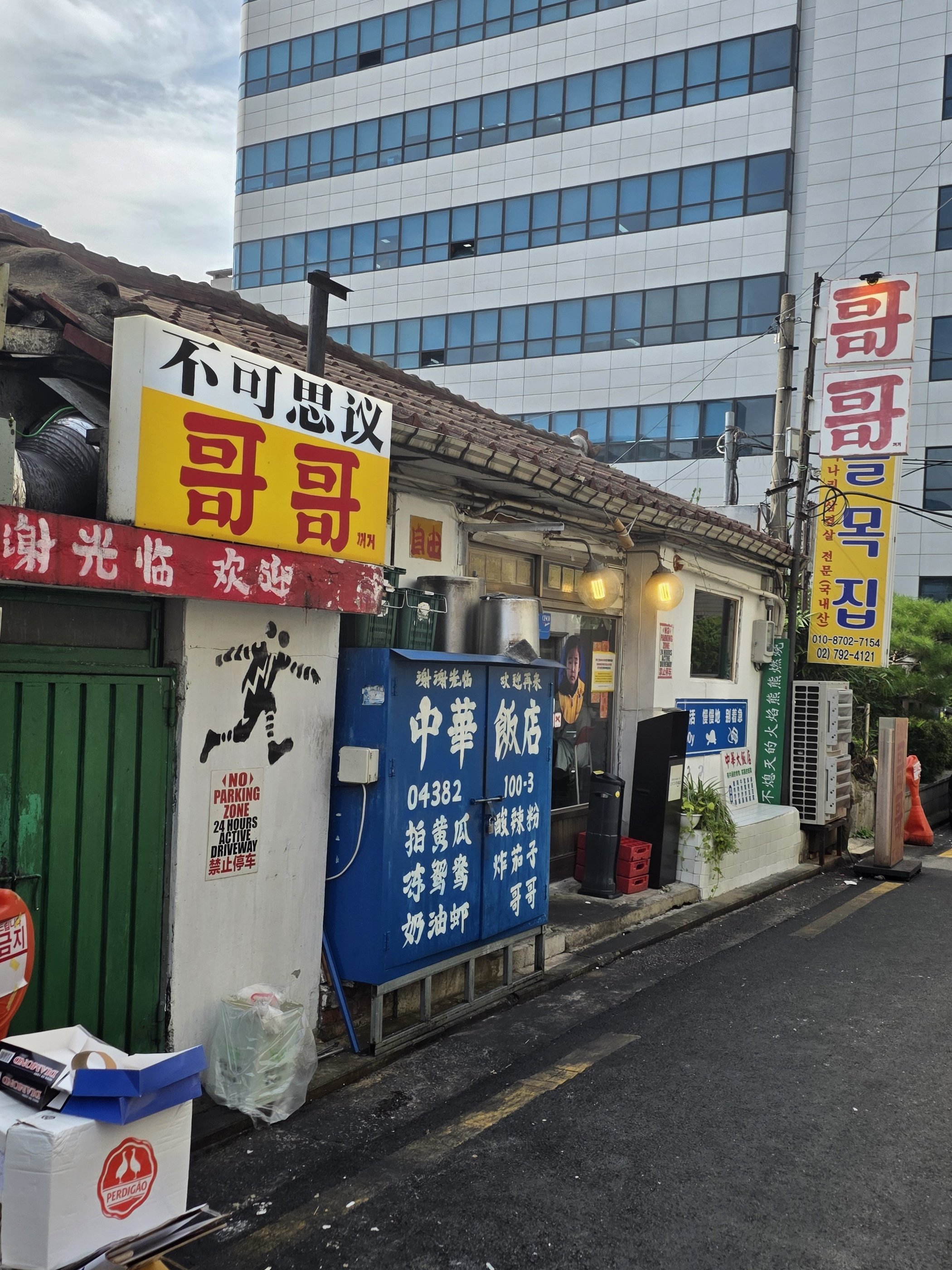
Some places don’t try to impress you the moment you walk in. GEGE (게게) is one of those places. From the outside, it almost feels like you’ve stumbled into a leftover corner of another era — worn signage, mismatched colors, and the kind of exterior that makes you pause and wonder if you’re in the right place. But that hesitation disappears the moment you sit down and the food starts arriving.
GEGE, led by Chef Nam Joon-young, isn’t about chasing trends or plating food for social media. It’s about recreating a very specific feeling: the comfort, chaos, and depth of old-school Chinese-Korean dining, filtered through a modern chef’s understanding of balance and flavor. And judging from the first bite alone, that intention comes through clearly.
Today’s Stop : GEGE (꺼거)
Address : 1st Floor, 3rd Floor, Hangang-daero 48-gil 10, Yongsan-gu, Seoul
Instagram : @wearegege
What Does “GEGE” Mean?
Before the food even came out, I kept thinking about the name GEGE (꺼거 / 哥哥) — because it’s one of those names that instantly feels familiar, even if you can’t explain why.
In Chinese, “gege” (哥哥) literally means “older brother.” It’s a word people use casually in everyday life, either to refer to their actual brother or as a friendly way to address someone older (or someone who feels protective, reliable, and close). It has a warm, slightly nostalgic tone — not formal, not distant, just comfortable.
And honestly, that meaning fits the vibe of GEGE perfectly. The restaurant doesn’t feel like it’s trying to be trendy or intimidating. It feels more like being taken care of by someone who knows what they’re doing — the kind of place where the flavors are bold and comforting, the portions don’t feel stingy, and everything tastes like it’s meant to fill you up properly.First Impressions: A Space That Doesn’t Pretend
Walking past the storefront, the visuals already tell a story. Bold Chinese characters, weathered signboards, and a layout that feels almost stubbornly unchanged. There’s no minimalist design language here. No polished café aesthetic. Instead, GEGE leans fully into nostalgia — not as a gimmick, but as atmosphere.
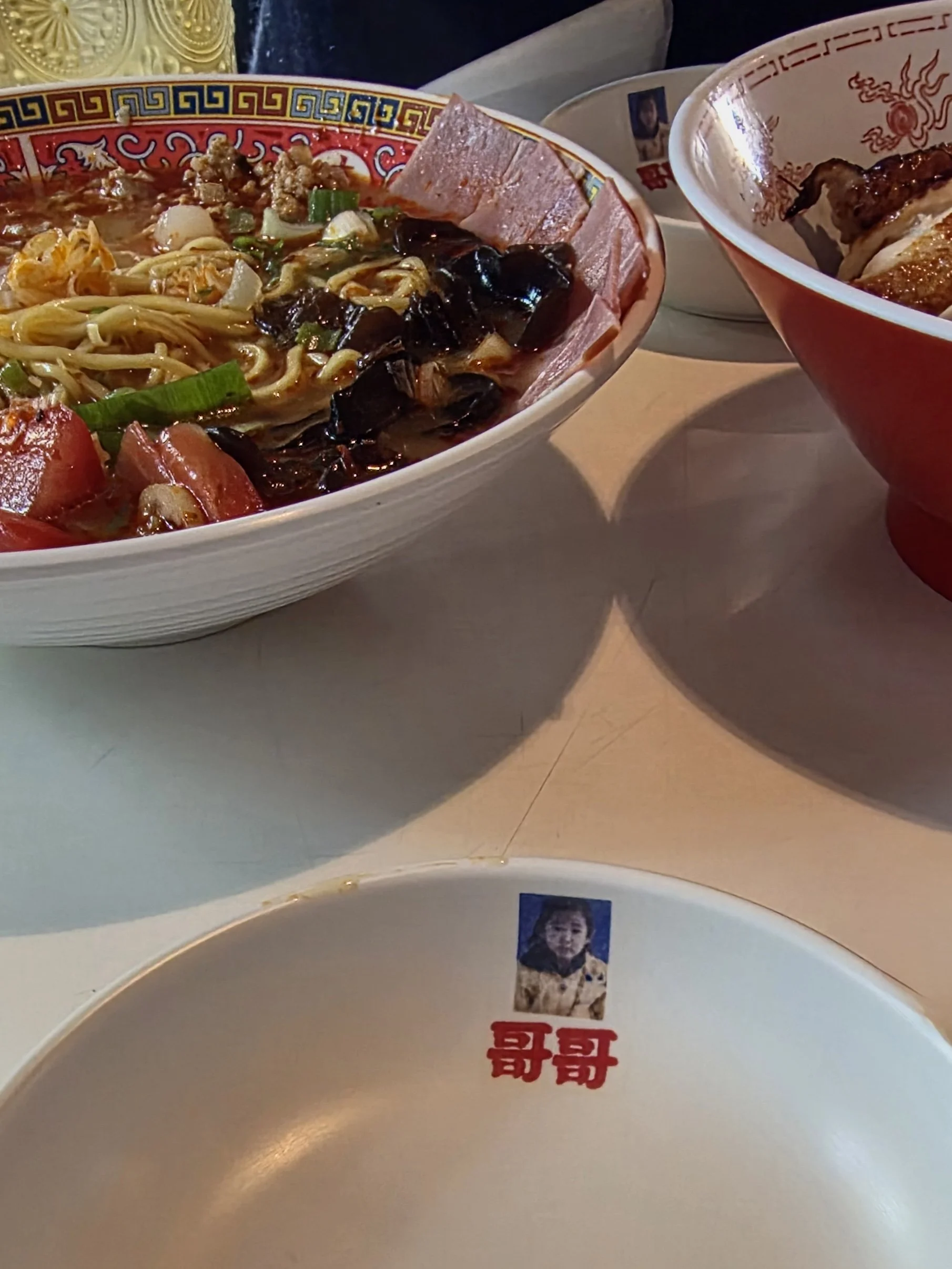
Inside, the bowls themselves tell you everything you need to know. The red-and-white patterns, the slightly retro typography, even the small portrait printed inside the dish — it all feels deliberately familiar, like something you might’ve grown up seeing at neighborhood Chinese restaurants. It sets the tone before you even taste the food.
The Char Siu Noodles: Simple, Focused, Deeply Satisfying
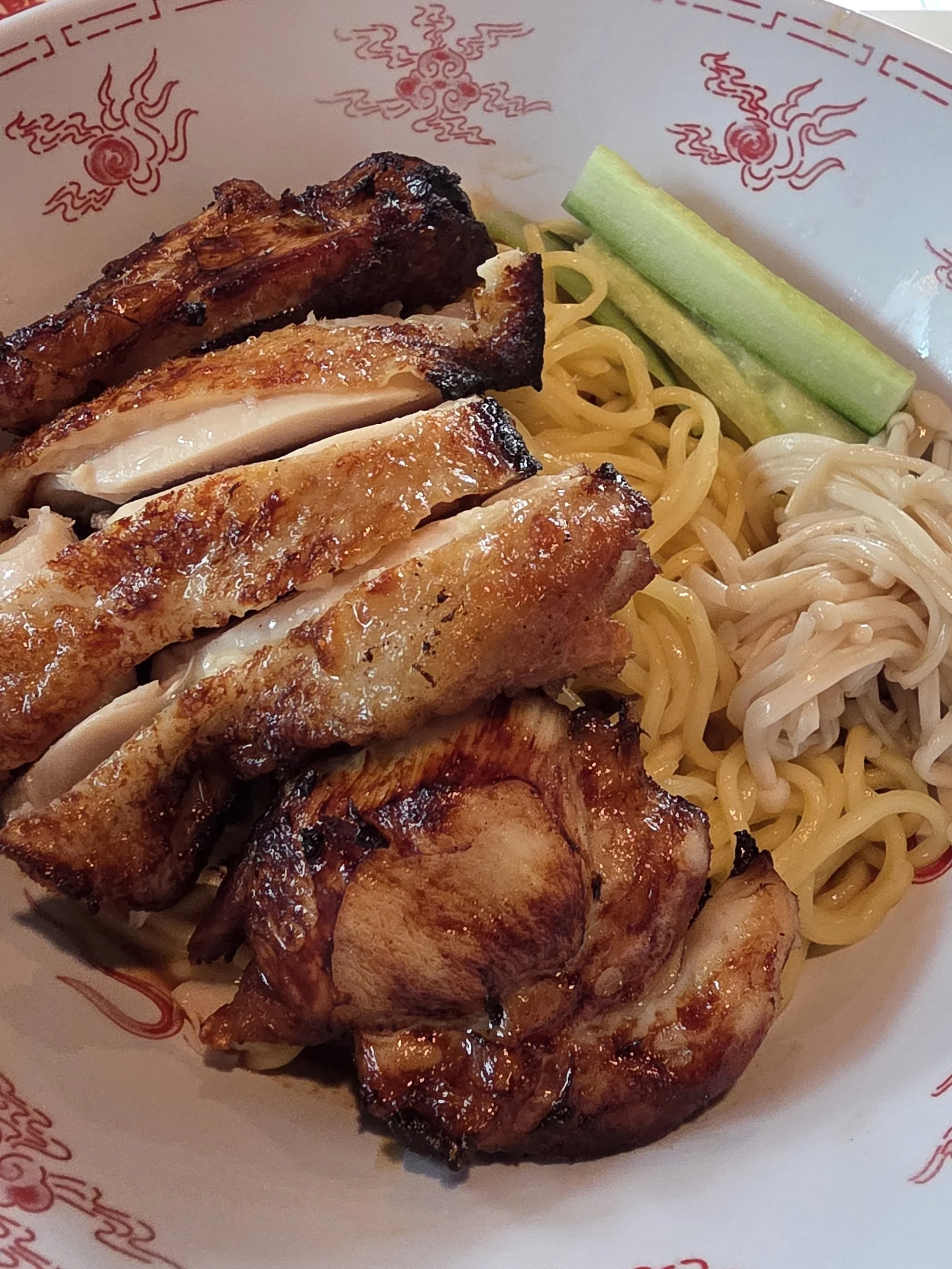
One of the standout dishes was the char siu-style pork served over noodles, and it’s the kind of dish that doesn’t need explanation once it’s in front of you. Thick slices of pork, caramelized just enough on the outside, still juicy inside, resting on springy yellow noodles with pale cucumber strips for contrast.
What stood out immediately was the texture of the pork. It wasn’t overly sweet, nor was it aggressively smoky. Instead, it felt balanced — glazed just enough to bring out richness without masking the meat itself. The fat rendered cleanly, giving each bite a soft, glossy mouthfeel rather than heaviness.
Paired with the noodles, the dish felt comforting rather than flashy. This isn’t food that demands attention — it quietly earns it.
Cold, Spicy, Addictive: The Cucumber Salad
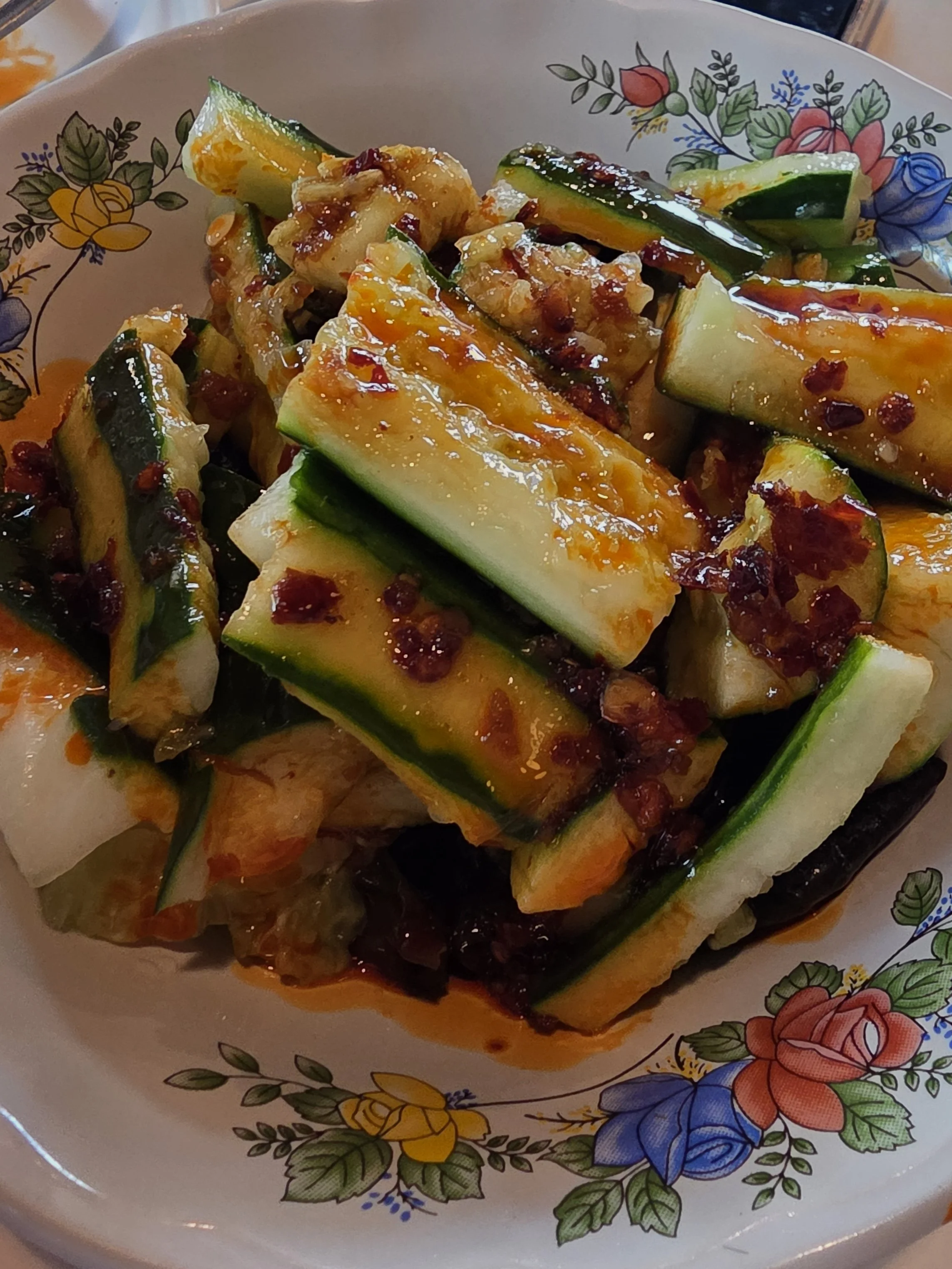
One of the simplest dishes on the table ended up being one of the most addictive: marinated cucumber cut into thick chunks, dressed in chili oil, garlic, and seasoning.
It was crisp, cold, spicy, and slightly sweet — the perfect counterpoint to the heavier dishes. Each bite reset the palate, cutting through richness and making you reach back for another piece almost unconsciously. It’s the kind of side dish that disappears quickly without anyone noticing who took the last bite.
This dish alone showed how much attention is paid to contrast at GEGE. Nothing exists on the table by accident.
Sweet-and-Sour, But Done Right
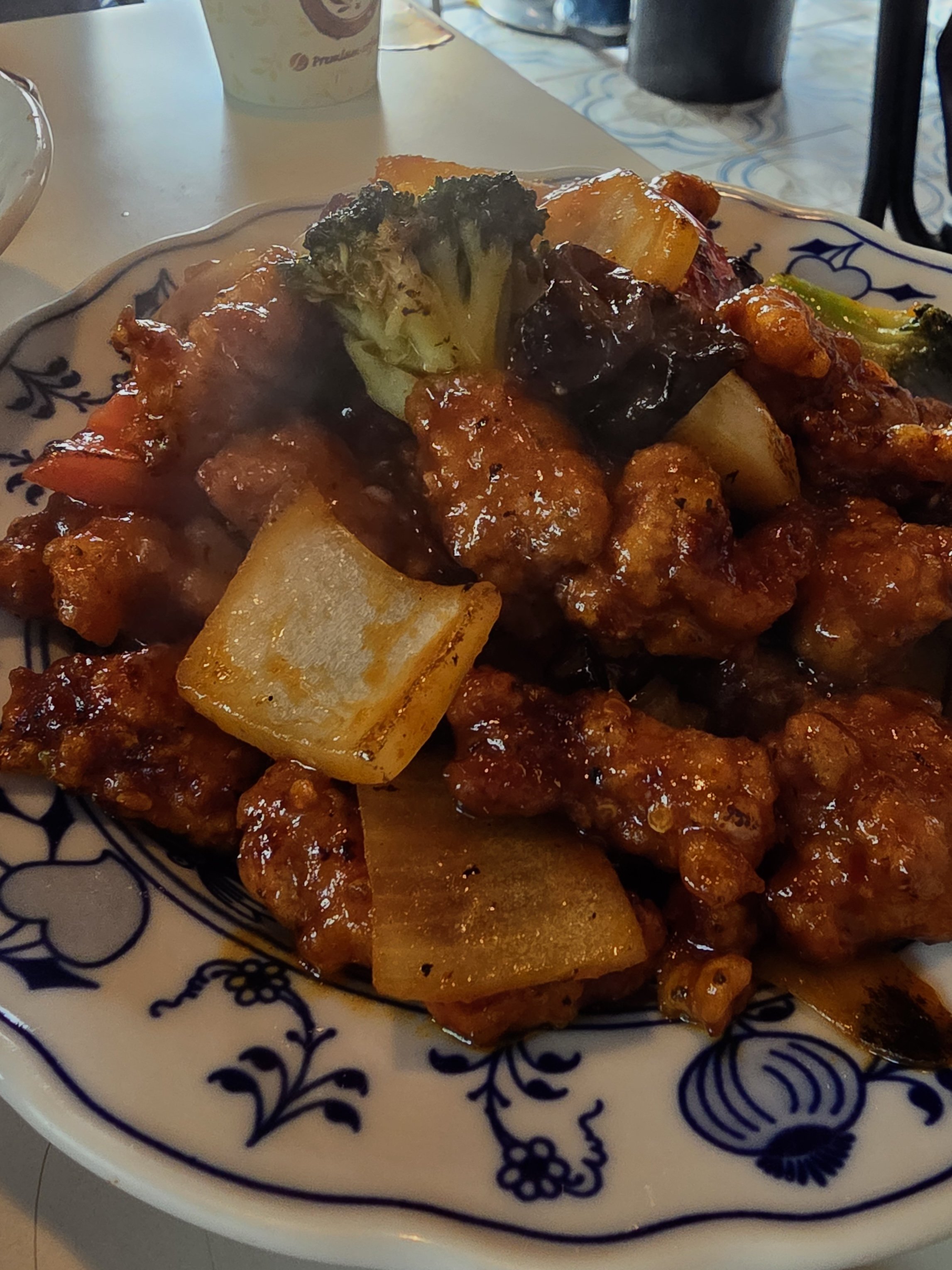
The sweet-and-sour style dish (tangsu-inspired) arrived steaming, coated in a glossy sauce that clung tightly to each piece. The batter was light, not soggy, and the sauce wasn’t aggressively sugary — a common pitfall with this dish.
Instead, it leaned slightly savory, letting acidity do more work than sweetness. Pineapple and vegetables added texture rather than overwhelming the plate, and the sauce stayed balanced even as it cooled. That’s usually the real test.
It tasted nostalgic, but not dated — familiar, yet refined.
What Makes GEGE Different
GEGE doesn’t reinvent Chinese-Korean food. That’s exactly why it works.
Rather than deconstructing dishes or modernizing them beyond recognition, Chef Nam Joon-young seems focused on doing classic flavors properly, with restraint. The food feels intentional without being precious. It respects tradition without being trapped by it.
There’s also something refreshing about how unapologetically hearty the dishes are. Portions feel generous. Flavors are comforting. This is food meant to be shared, talked over, eaten slowly, and remembered afterward.
A Meal That Feels Like a Memory
By the time the table was cleared, what stuck with me wasn’t a single “wow” moment, but the overall feeling of the meal. GEGE doesn’t aim to overwhelm you with novelty. Instead, it builds familiarity — the kind that makes you want to come back without needing a special reason.
It feels like a place where regulars would exist. Where people come not to be impressed, but to feel fed — properly.
Final Thoughts: Who GEGE Is For
GEGE is for people who appreciate old-school Chinese-Korean food, but want it executed with care. It’s for diners who value flavor over presentation, balance over shock, and atmosphere over trends.
If you’re looking for a place that feels genuine — not staged, not overly polished — GEGE delivers exactly that. It’s the kind of restaurant that quietly earns loyalty, one bowl at a time.
And honestly? Those are usually the places worth returning to the most.
