ETF Bakery (ETF 베이커리) : 990 won Salt Bread in Seoul?
I didn’t know what to expect when I first heard about ETF Bakery — part social experiment, part bakery, part pop-culture flashpoint — but after diving into its history, logic, and now real-world presence in Anguk (안국), Seoul, it’s clear this isn’t just another “Instagram bakery.” It’s a conversation starter about price, quality, community, and what bread in Korea should cost.
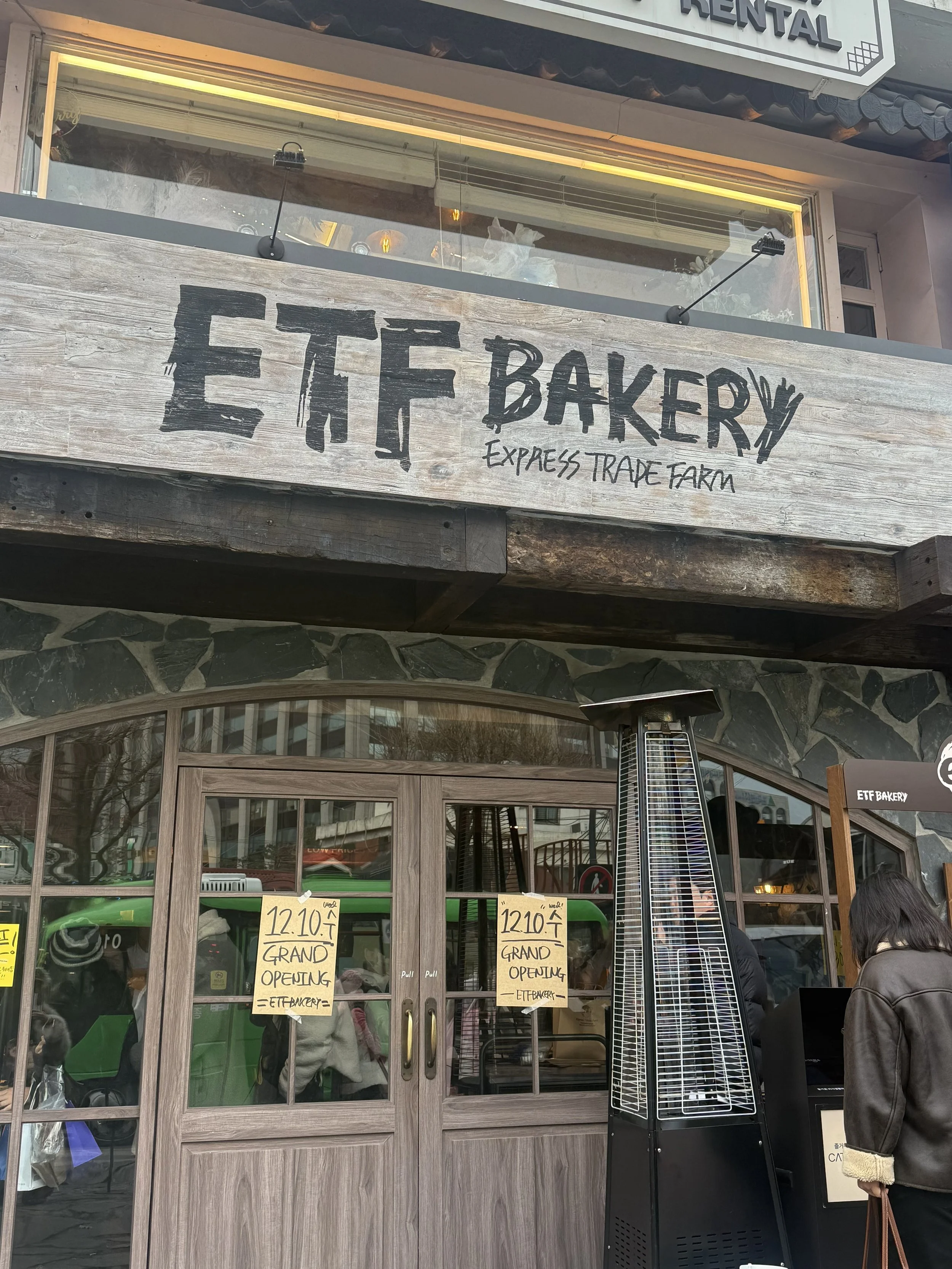
Today’s Stop : ETF Bakery
Address : 1st Floor, Bukchon-ro 3, Jongno-gu, Seoul.
Instagram : @etf.bakery_official
1. What is ETF Bakery, Really?
At its core, ETF Bakery is a bakery brand with an overt twist: it started as a pop-up concept that aimed to sell high-quality bread at shockingly low prices. The name itself — “ETF” — hints at financial metaphors like Exchange Traded Fund, suggesting bread should be accessible, transparent, and efficient like a financial product.
It first hit public consciousness not as a normal bakery opening but as an experimental pop-up in Seoul’s trendy Seongsu area. The pop-up offered breads — most famously the 990 won 소금빵 (salt bread) — at prices far below what people were used to seeing, leading to massive lines, viral social media posts, and intense debate about bakery pricing in Korea.
The project’s goals were stated simply:
Provide high-quality bakery items at reasonable prices
Challenge the narrative of unnecessarily expensive bread
Create a brand that more people could enjoy without breaking the bank
But its execution didn’t stay purely academic. It got real: long lines, big crowds, social discussion, and actual bread in people’s hands.
2. The Controversy Over “990won Salt Bread”
Let’s be honest: the attention around ETF Bakery wasn’t because of some quiet, understated grand opening. It was because the idea of “bread for 990 원” blew up. Normal Korean bakery prices for a simple salt bread hover well above that, often in the 3,000won range. A price under 1,000won disrupted expectations.
Public and Industry Reaction
The reactions fell into a few camps:
Consumers:
Many loved it. Affordable bread, tasty offerings, and the idea that bread could be fair-priced resonated with customers who had long felt bakery prices were too high.
Lines and social posts showed genuine excitement, not just curiosity.
Some Bakers / Small Businesses:
Felt threatened or misunderstood. Real bakeries face real costs: rent, labor, ingredients, equipment depreciation, utilities — none of which disappear just because bread sells cheaply. Some argued that selling bread so cheaply could distort how consumers view ethical pricing and undermine independent bakeries.
Observers:
Some saw the project as performative — great for social buzz but not a long-term sustainable business model. They pointed out that a large influencer behind it and minimal fixed costs during pop-ups skew the price narrative.
The result? The pop-up closed after a short run, despite huge interest. But the idea didn’t die.
3. From Pop-Up to Real Store: ETF Bakery Anguk Opens
The big news now is that ETF Bakery has grown up — it’s no longer a fleeting pop-up. On December 10, 2025, the brand officially opened its first full-time store in Anguk (안국), right near Anguk Station in Seoul.
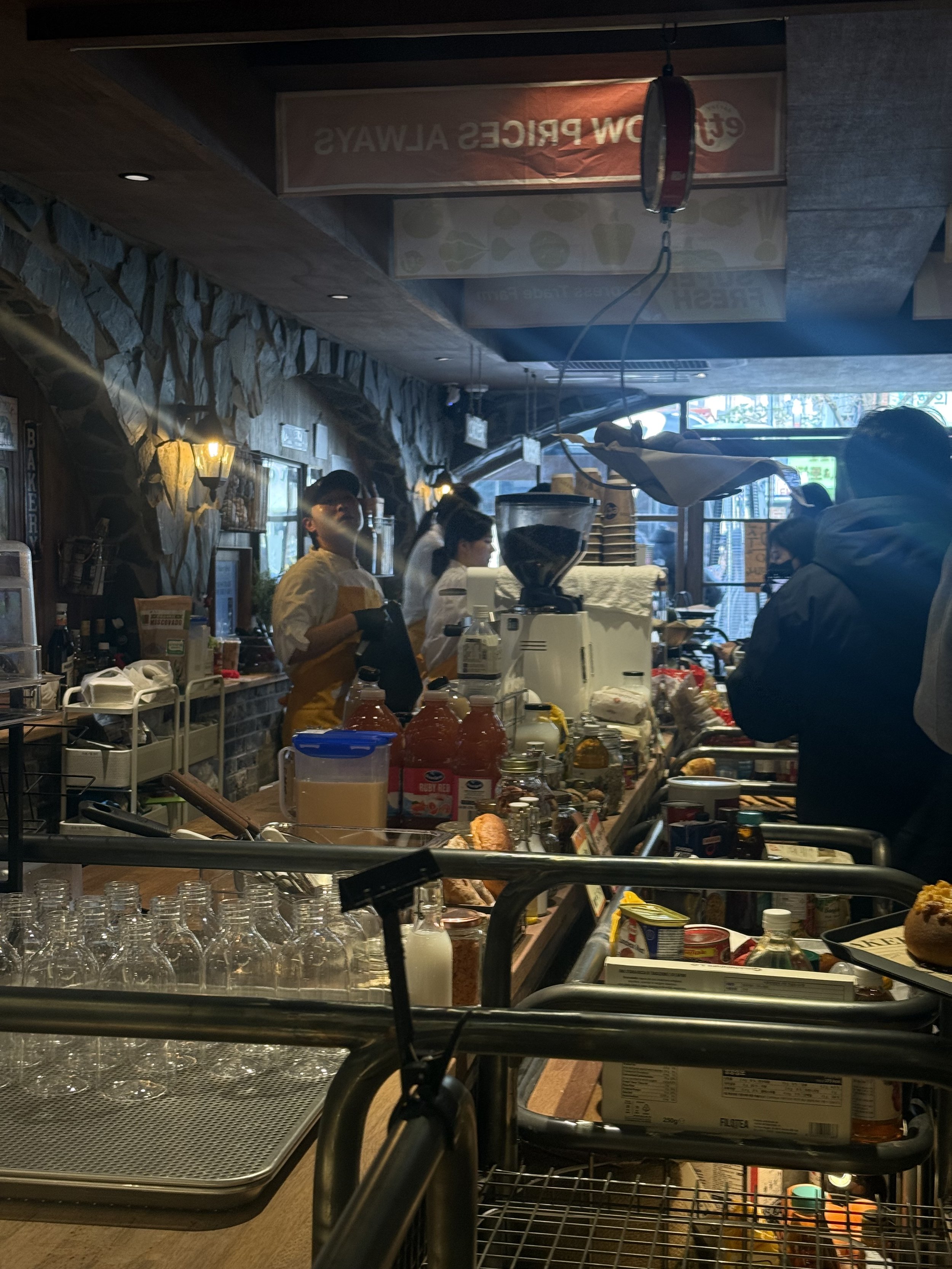
The Anguk store isn’t a temporary gimmick or a hype stunt. It’s a legitimate, seated bakery and café space meant to offer the brand’s best products on an ongoing basis.
Key Features of the Anguk Store
Regular Bakery Seating: This isn’t just take-out bread — there’s room to sit, relax, and actually enjoy your food in the store.
Reworked Menu: Based on feedback from the pop-up, the Anguk menu was reorganized to focus on better taste, larger sizes, and balanced pricing.
Waiting System: They introduced a Catch Table waiting system to manage crowds — an acknowledgment that demand is real.
In short: this is not a side project anymore — it’s a standalone bakery with its own identity, space, and mission.
4. What You Can Actually Eat There (And What it Costs)
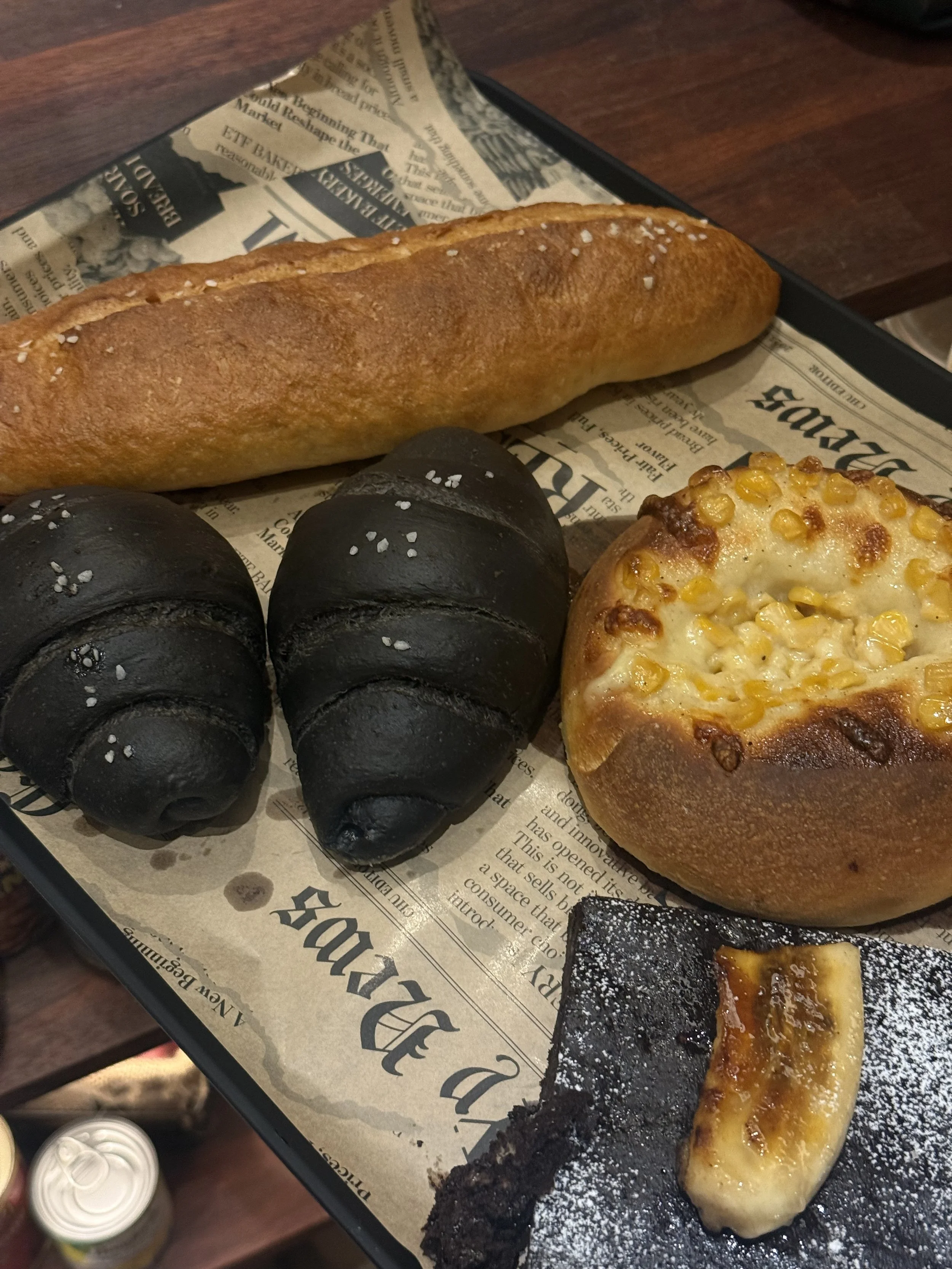
The Anguk store’s menu reflects the promise of affordable quality without the inflation shock you might find elsewhere. Here’s a breakdown of what you can expect:
Bread & Baked Goods
The menu includes a wide range of options, usually 1,000 won to 4,000 won for key items — very competitive for a premium bakery in central Seoul:
ETF 소금빵 (Salt Bread) – staple that started it all : 1,190 won
트러플 소급빵 (Truffle Salt Bread) : 1,990 won
리코타 단호박 포카치아 (Ricotta Pumpkin Focaccia) : 2,990 won
쑥쑥크림빵 (Mugwort Cream Bread) : 3,980 won
크림 대빵 (“Cream Big Bread”, ~8 serving size) : 3,980 won
Health-Focused Items
밀가루ZERO 고구마 계란빵 (Flour-free Sweet Potato Egg Bread) : 1,980 won
밀가루ZERO 초코바나나 브라우니 (Flour-free Choco Banana Brownie) : 1,980 won
These items add diversity beyond classic bakery goods, offering gluten-reduced alternatives.
Cakes & Desserts
Million-won cake pricing is out — but in Anguk, cakes are under 20,000 원, with options like:
알밤 듬뿍 타르트 라지 (Chestnut Tart) : 11,900 won
메리 레드벨벳 케이크 (Merry Red Velvet) : 14,900 won
딸기밭 케이크 (Strawberry Field Cake) : 19,800 won
These sit well within what many local bakeries charge without the hype. Affordable, decent portions, solid quality.
5. So… Is This Value or Just Hype? (Real Talk)
It’s easy to dismiss ETF Bakery as a gimmick — after all, it started with social media buzz and unconventional pricing. But with the Anguk store now fully open and reworked, you can see the strategy isn’t just hype:
Pros
Affordable price points for quality product — competitive with local bakeries without being ridiculous.
Real café space with seating, drinks, and atmosphere — not just a grab-and-go popup.
Menu variety beyond the ultra-cheap gimmick.
Cons / Criticism
Not everyone loves the branding or the initial pop-up price stunt.
Independent bakeries still have real cost structures that can’t be erased — and some felt the experiment trivialized that reality.
Some customers noted that once you add multiple items and a drink, the total bill isn’t exactly budget bakery territory.
The current takeaway? ETF Bakery is no longer a stunt. It’s a legit contender in the Seoul bakery space — and it’s proving its concept with taste and experience, not just pricing jokes.
6. Visiting ETF Bakery Anguk – What You Should Know
If you decide to go, here’s how to make the most of it:
Location: Near Anguk Station, Jongno-gu, Seoul — central and walkable from tourist-friendly neighborhoods.
Best Time: Arrive off-peak if you want fewer crowds — early afternoon or late afternoon tends to be chillest.
Try Before You Judge: Order a couple of bread items and a drink. Bread quality here isn’t gimmick — it’s thoughtful and deliberate.
Don’t Expect Ultra-Cheap Forever: The Anguk pricing is balanced, not shockingly low like the pop-up was. That was the old experiment, not the current business model.
7. Final Thoughts
I went in curious and came out thinking: ETF Bakery isn’t a fad — it’s a conversation piece about accessibility and quality. At its worst, it stirred controversy. At its best, it pushed a norm — bread doesn’t always have to cost absurdly high prices for good taste.
Anguk’s real bakery presence shows a move toward sustainable practice instead of flashy stunt. If you’re in Seoul and care about bread that’s genuinely good — and not just overpriced because it looks nice on Instagram — ETF Bakery in Anguk is worth visiting.
It’s where talk meets taste, and the bread actually holds up.
