Twelve at House of Shinsegae Cheongdam : Inside the Erewhon of Seoul
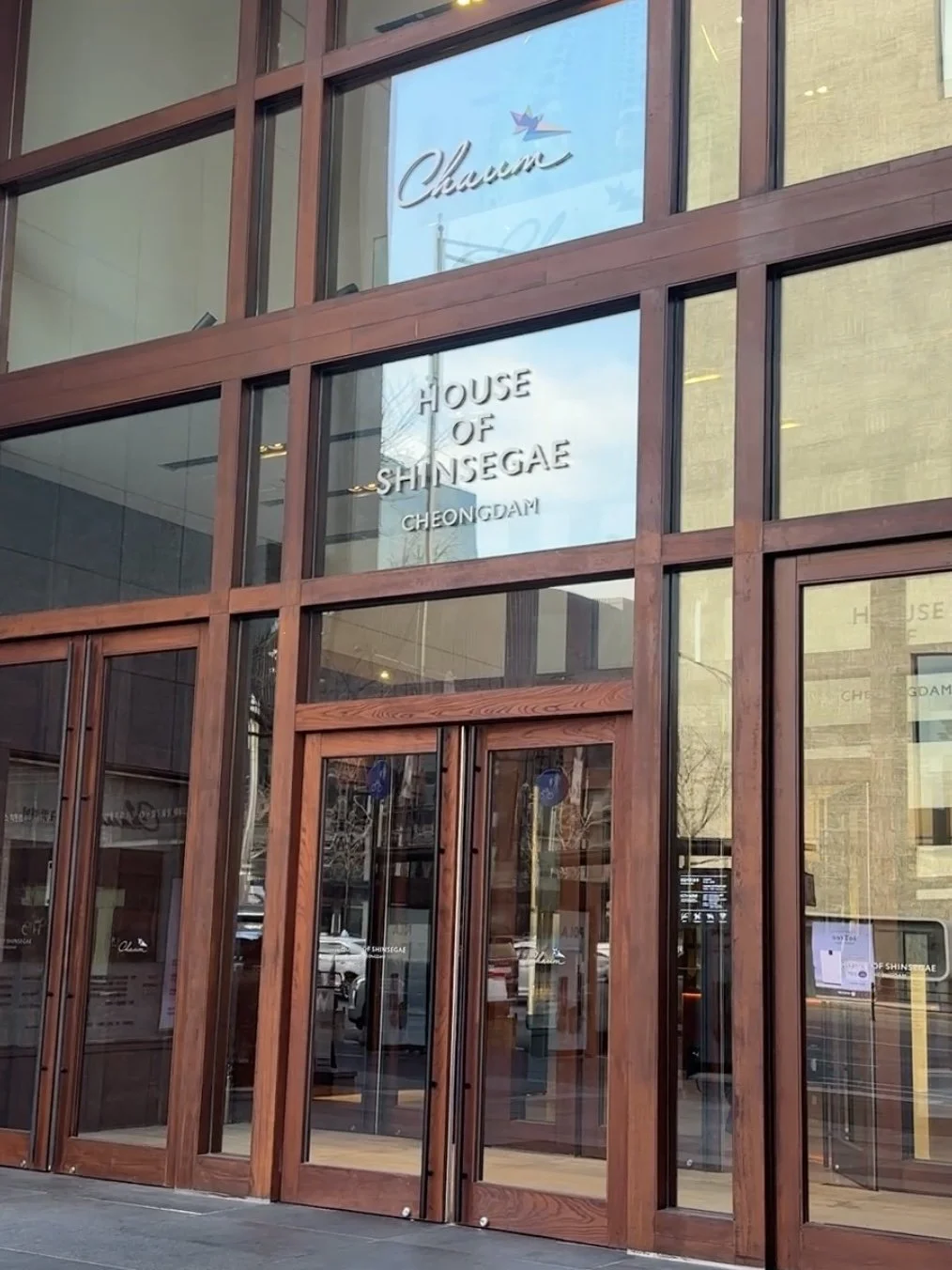
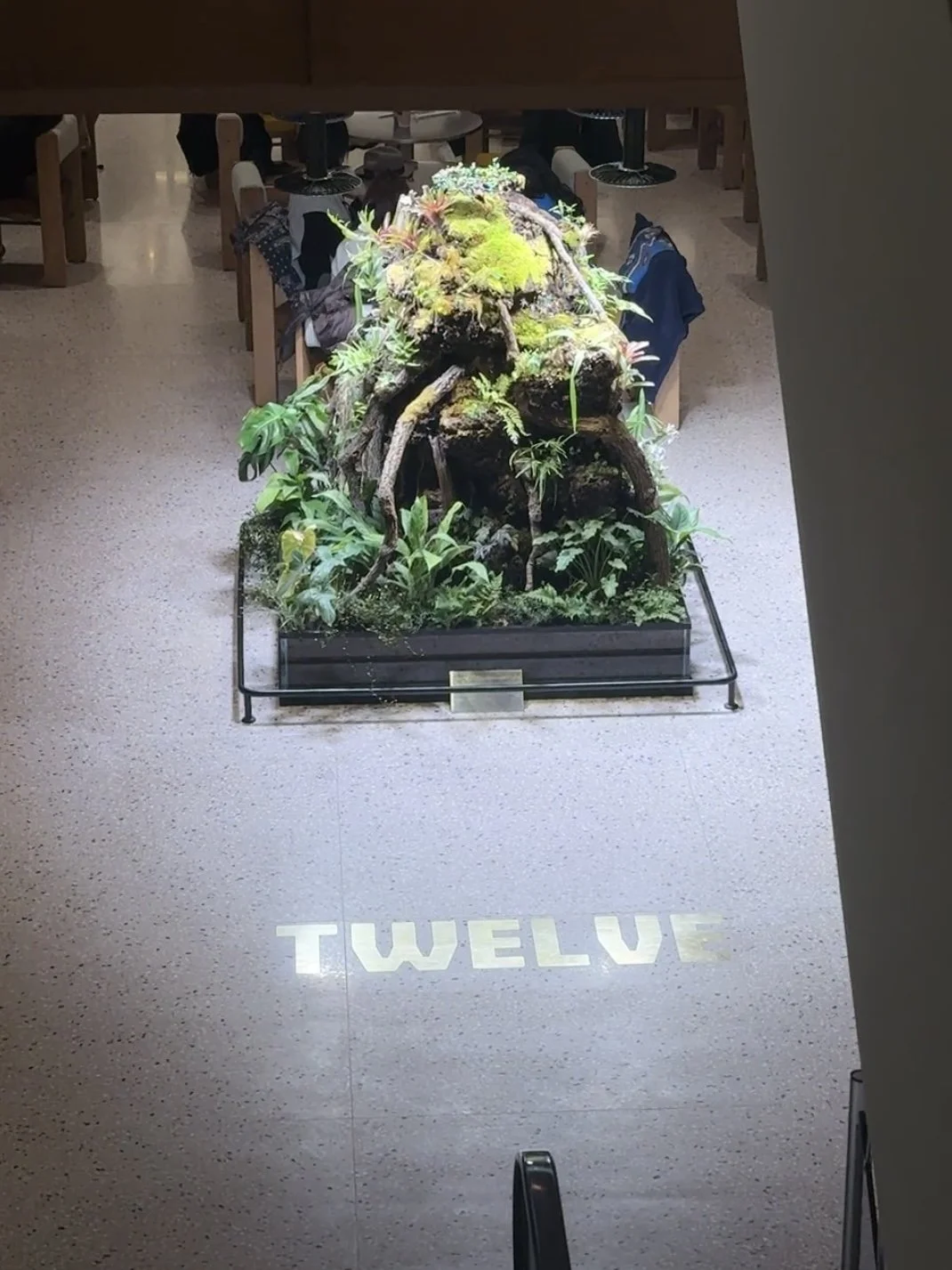
If you have seen Twelve on Korean TikTok or Instagram recently, chances are it was not because of a discount or a sale. It is because of visuals—rows of pastel smoothies lined up like color swatches, fruit displayed as if it belongs in a gallery, and products individually labeled in a way that immediately signals premium. Located inside House of Shinsegae Cheongdam, Twelve has quickly become one of the most talked-about food and lifestyle spaces in Seoul.
I visited Twelve in person to see what the hype was actually about. This post is based strictly on what is observable on-site—no speculation, no assumptions. From the smoothie bar that draws people in first, to the meticulously labeled grocery sections, to the inevitable comparisons with Erewhon, here is what Twelve really offers and why it feels different from a typical department-store food hall.
Today’s Stop : Twelve @ House of Shinsegae, Cheongdam
Address : 176 Sinbanpo-ro, Seocho-gu, Seoul
Instagram : @houseofshinsegae
The Smoothie Bar that defines Twelve at first glance
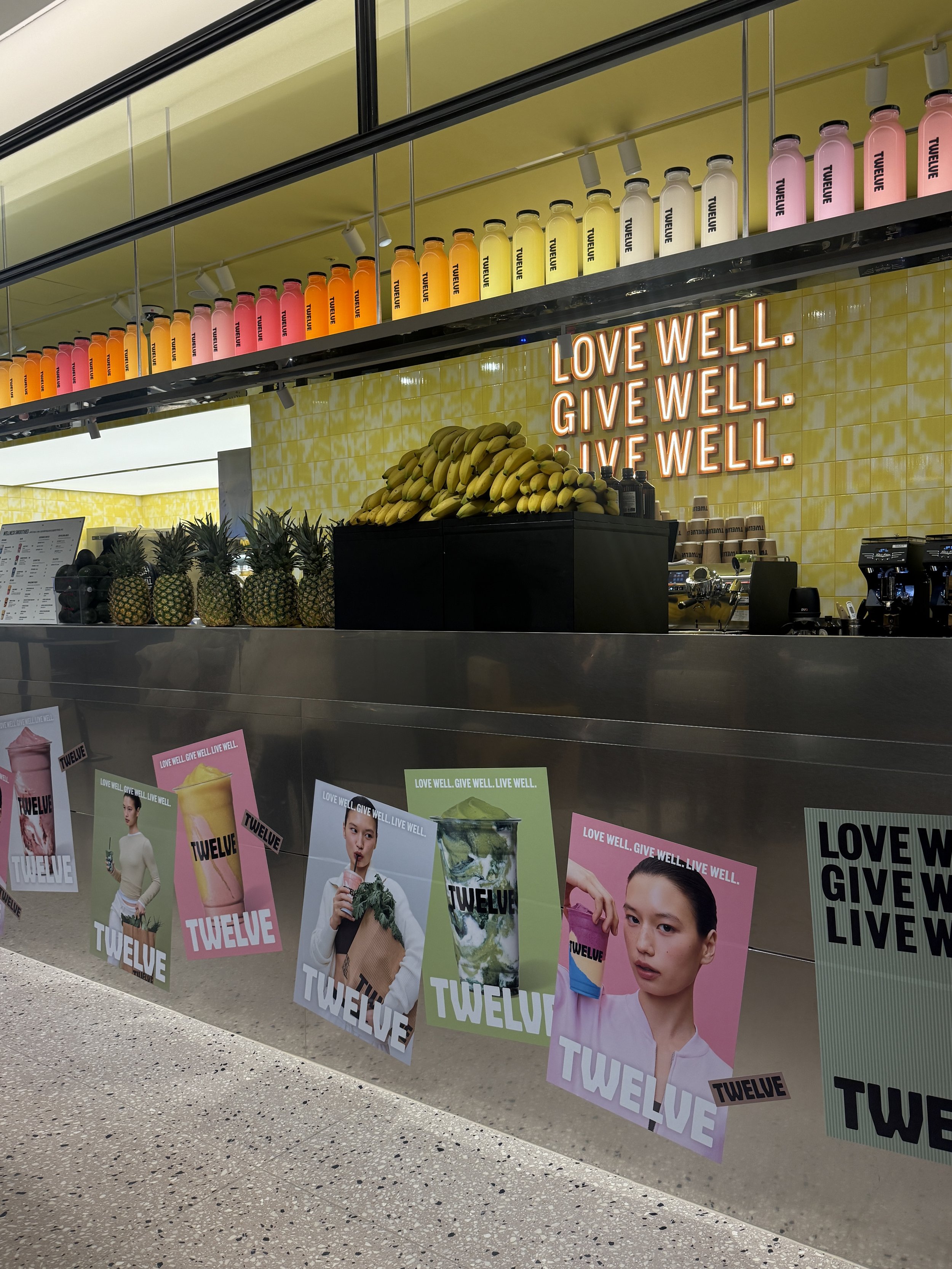
The first thing most visitors notice—and the reason Twelve dominates short-form video platforms—is the smoothie bar. It is positioned prominently and designed to be visually arresting. Bottled smoothies are arranged in a long horizontal line above the counter, each color transitioning smoothly into the next: pale yellows, soft greens, vibrant oranges, muted pinks. The bottles are uniform, cleanly labeled, and unmistakably intentional.
From a design perspective, this is not accidental. Everything about the smoothie bar encourages people to stop, look, and film. Even the wall behind the counter reinforces the branding with bold typography and wellness-focused messaging. Fruit such as bananas and pineapples are stacked in large quantities, not hidden away, reinforcing freshness and abundance.
What stands out is not just that smoothies are sold, but how they are presented. Each bottle is clearly labeled, giving the impression of transparency and control. Whether or not you choose to buy one, the smoothie bar functions as a visual anchor for the entire Twelve experience. It sets the tone: modern, health-oriented, and highly curated.
This is also where comparisons to Erewhon begin. Like Erewhon’s smoothie counters in Los Angeles, Twelve’s smoothie bar positions wellness drinks as a lifestyle product rather than a quick takeaway. The emphasis is on appearance, branding, and perceived quality, not speed.
Why Twelve is constantly compared to Erewhon
The comparison to Erewhon did not come from nowhere. On social media, users frequently describe Twelve as “Korea’s Erewhon,” and after visiting, it is easy to understand why the association sticks.
Both concepts share several observable similarities:
A strong focus on wellness-oriented products
Clean, minimal design with an emphasis on visual merchandising
Smoothies and drinks positioned as hero items
Pricing and presentation that signal luxury grocery, not everyday shopping
That said, Twelve is not a replica. Erewhon is a standalone grocery chain deeply embedded in Los Angeles wellness culture. Twelve, by contrast, exists inside a luxury department store and operates more like a curated exhibition of food and lifestyle goods than a full grocery destination.
Where Erewhon feels expansive and utilitarian beneath its aesthetic, Twelve feels edited. The product selection is narrower, more controlled, and clearly designed to align with Shinsegae’s broader brand identity. In other words, Twelve borrows visual language that people associate with Erewhon, but applies it in a way that fits Seoul’s department-store culture.
The Power of Labeling: Why Everything feels Premium
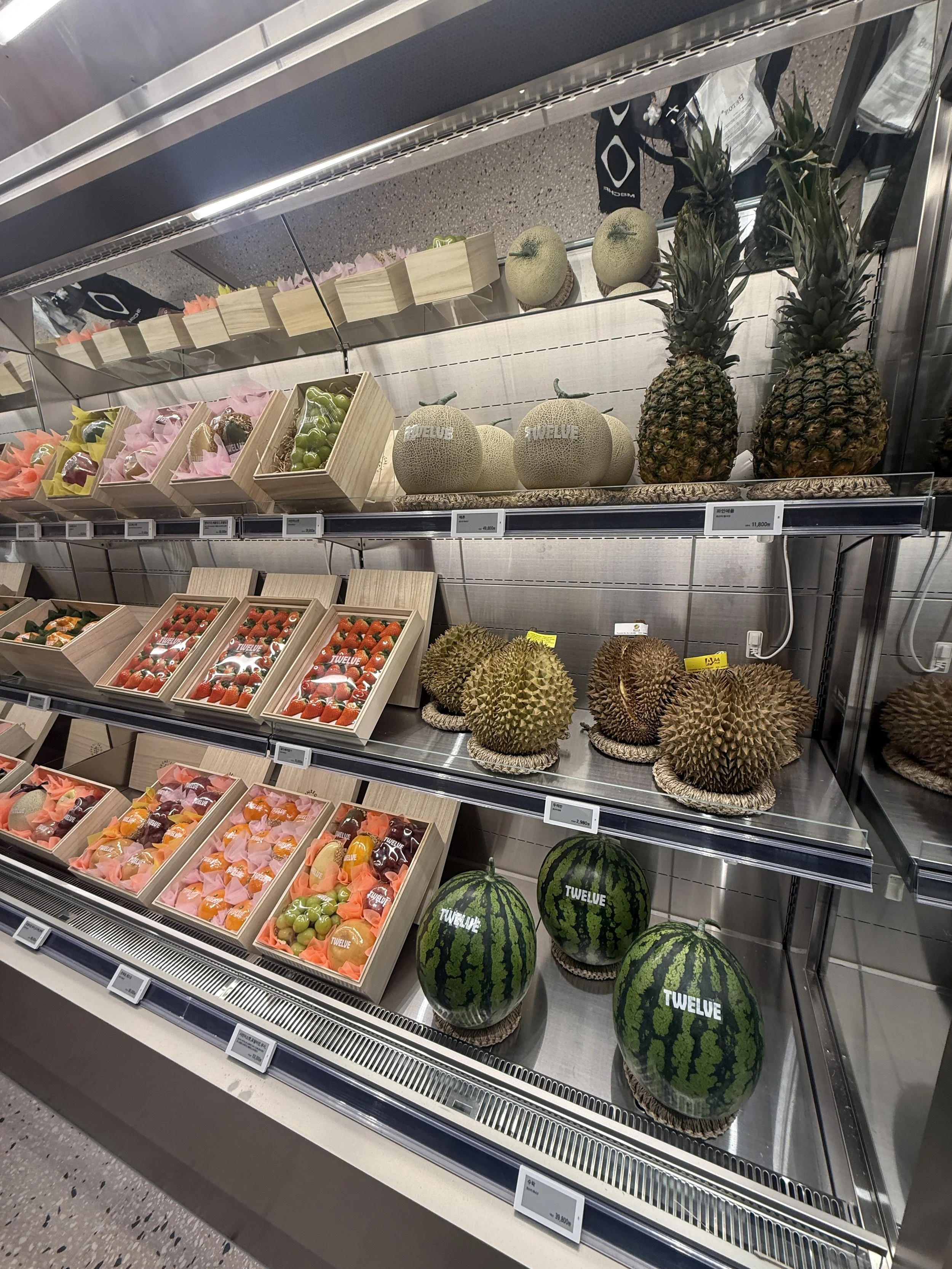
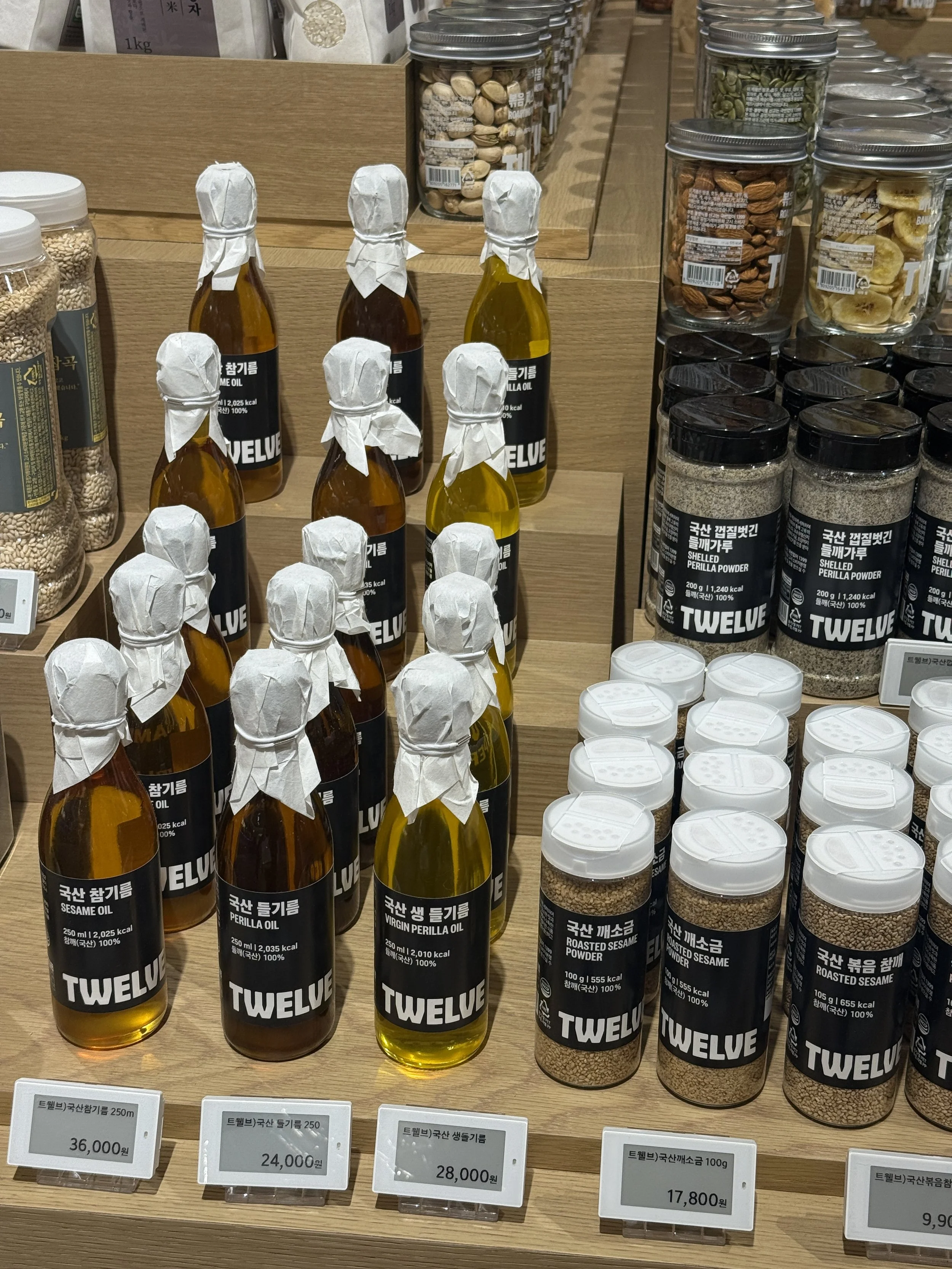
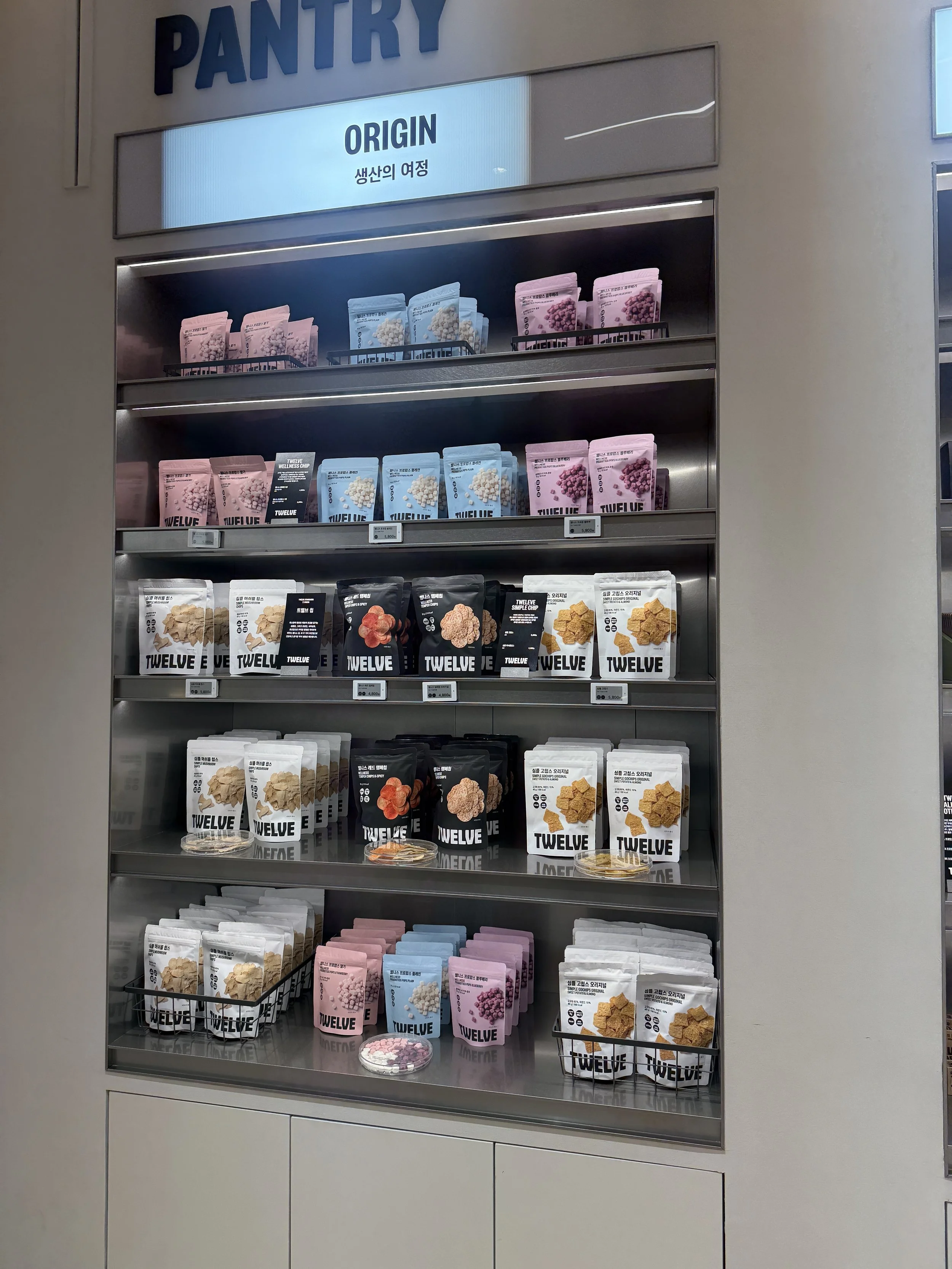
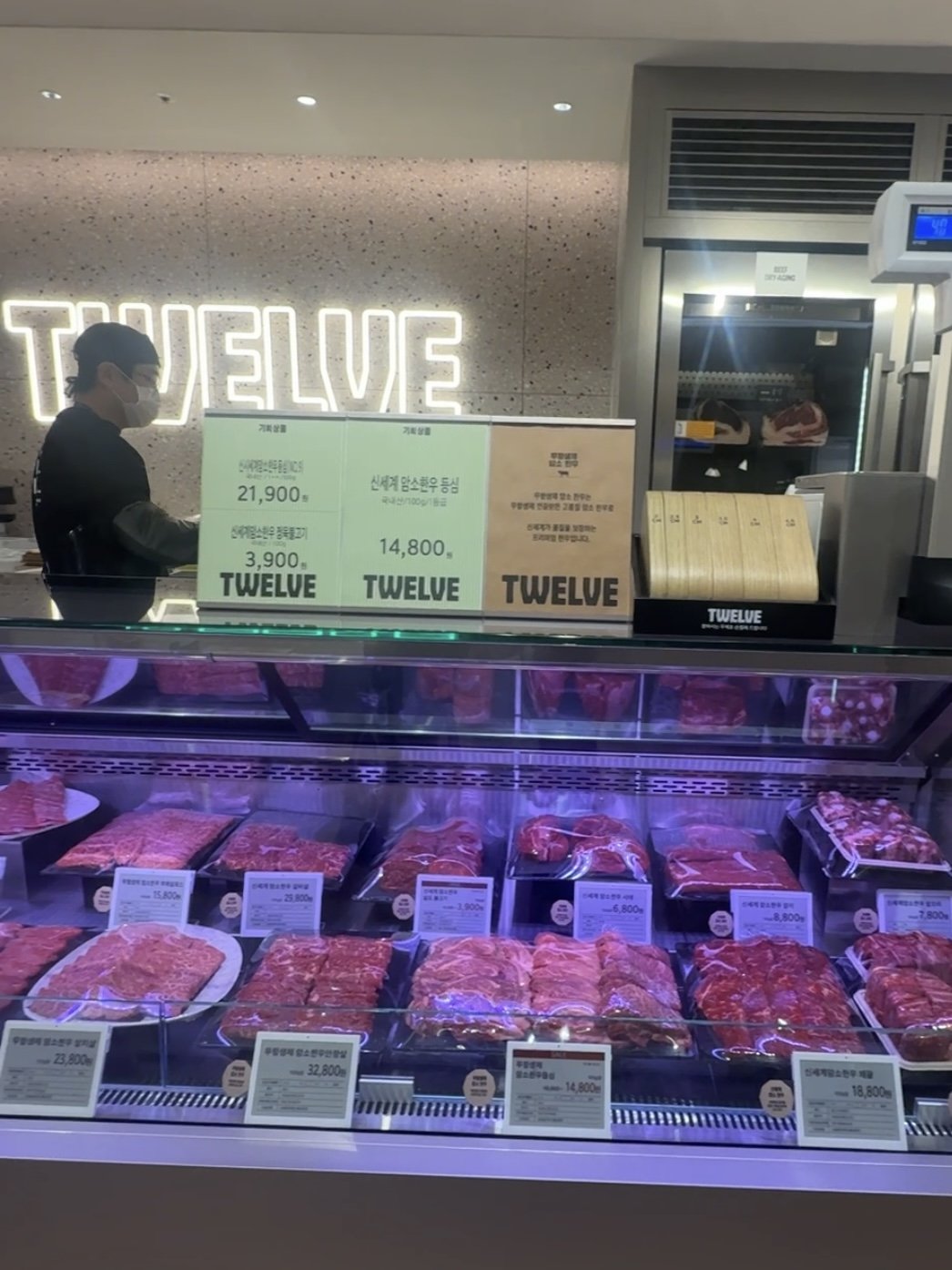
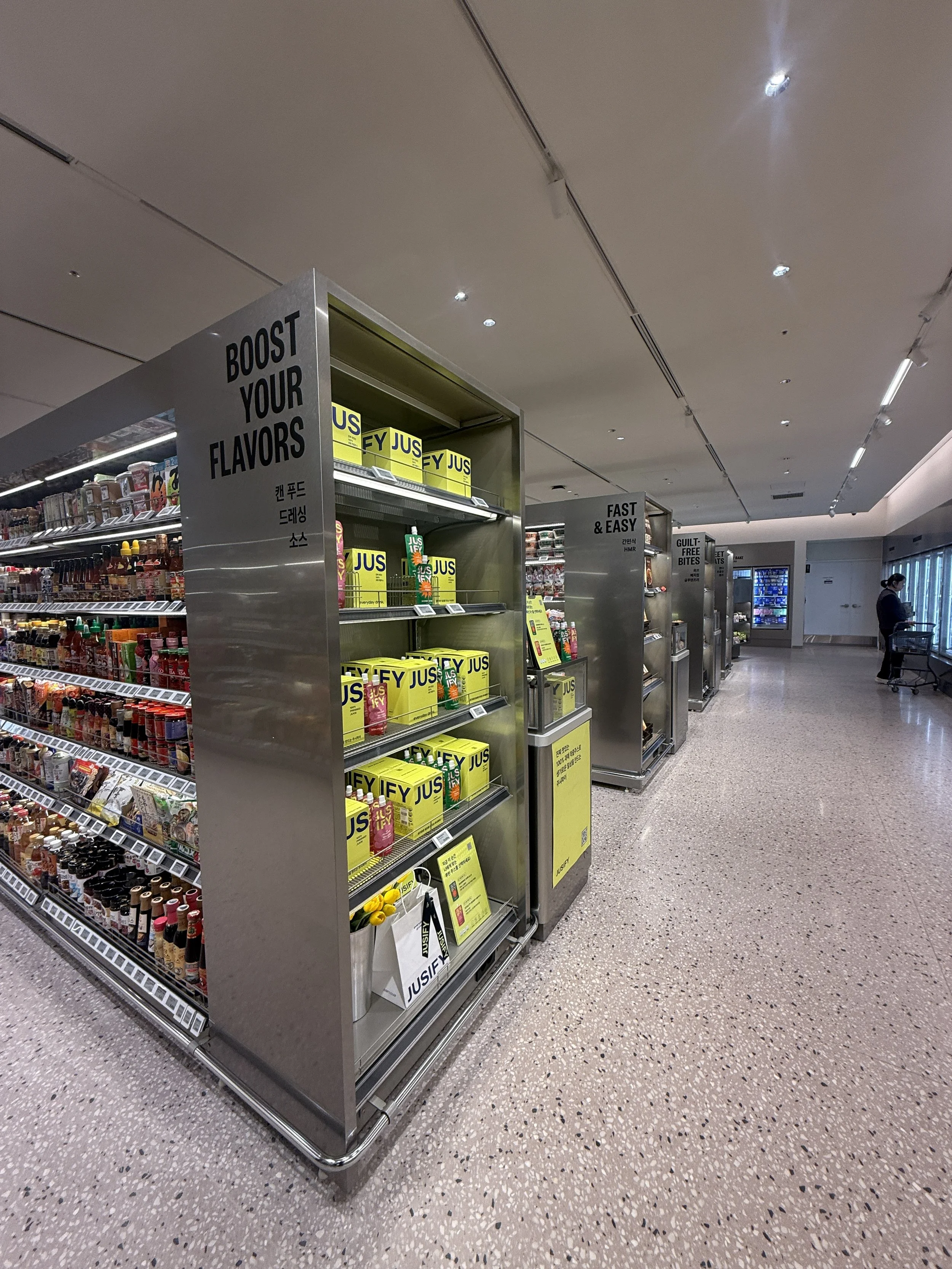
One of the most consistent details throughout Twelve is labeling. Almost every product—whether it is oil, powder, fruit, or packaged goods—comes with clean, uniform labels. Prices are clearly displayed. Product names are consistent in style and placement. Nothing looks accidental or improvised.
This level of labeling does more than provide information. It creates psychological distance between Twelve and an ordinary grocery store. When items are labeled in a consistent, restrained design language, they are perceived as curated rather than stocked. You are not just browsing; you are selecting.
This is especially noticeable in sections selling oils and pantry staples. Bottles of sesame oil, perilla oil, and powdered ingredients are displayed upright, evenly spaced, and clearly priced. The presentation makes each item feel deliberate, almost collectible.
This approach mirrors high-end retail rather than food retail. It is closer to how cosmetics or fragrance are displayed than how groceries are traditionally arranged. That is a major reason Twelve photographs so well—and why people linger longer than they might in a normal supermarket.
Fruit as Display, not just produce
The fruit section at Twelve deserves special attention. Instead of being piled into bins, fruits are arranged individually or in neat rows. Watermelons are branded. Melons are displayed like statement pieces. Gift-ready fruit boxes sit alongside loose produce, reinforcing the idea that fruit here can function as both food and present.
Again, this is not about practicality. It is about visual storytelling. The message is clear: even something as everyday as fruit is elevated here.
This approach aligns with how premium food halls in Japan or Europe treat produce, and it fits naturally within the House of Shinsegae environment. Visitors are encouraged to slow down, observe, and appreciate rather than rush through their shopping list.
Inside House of Shinsegae Cheongdam: Context matters
Twelve does not exist in isolation. Being located inside House of Shinsegae Cheongdam fundamentally shapes how it operates and how it is perceived. This is not a neighborhood grocery store. It is part of a destination space designed for browsing, discovery, and lifestyle consumption.
Because of this context, Twelve does not need to carry everything. It does not need bulk items or household essentials. Its role is to complement the broader Shinsegae experience by offering food and wellness products that feel aligned with luxury, design, and curation.
This also explains why Twelve attracts so much social media attention. Visitors are already in a mindset of exploration when they enter House of Shinsegae. Twelve becomes another visually rich stop within that journey.
What Twelve gets right—and what it is not trying to be
Twelve succeeds at creating a strong first impression. The smoothie bar draws people in. The labeling reinforces quality. The layout encourages slow browsing. For visitors interested in wellness trends, premium groceries, or simply well-designed retail spaces, Twelve delivers exactly what it promises.
What it is not trying to be is a replacement for a full supermarket. The selection is curated, not comprehensive. Prices reflect the environment and presentation. This is intentional, not a flaw.
The Erewhon comparison is useful as a reference point, but it should not overshadow the fact that Twelve is tailored to Seoul’s luxury retail ecosystem. It is a Shinsegae concept first, a wellness grocery second.
Is Twelve worth visiting?
If you are interested in:
Wellness and lifestyle retail
Food spaces that prioritize design and presentation
Seeing how global trends are adapted to the Korean market
Then Twelve is absolutely worth visiting, even if you do not plan to buy much. Much of its value lies in the experience of walking through it.
If you are expecting a practical grocery run, Twelve may feel limited. But that is not what it was designed for.
Final Thoughts
Twelve at House of Shinsegae Cheongdam represents a shift in how food retail is being positioned in Seoul. It is not just about what you eat, but how food fits into a broader lifestyle narrative. Through careful labeling, strong visual identity, and strategic placement of its smoothie bar, Twelve has created a space that feels instantly recognizable—and highly shareable.
The Erewhon comparisons will likely continue, especially online. But Twelve does not need to be Erewhon to succeed. It already functions effectively as a premium, design-driven food destination tailored to its location and audience.
For anyone curious about where Seoul’s luxury food culture is heading, Twelve is one of the clearest case studies right now.
